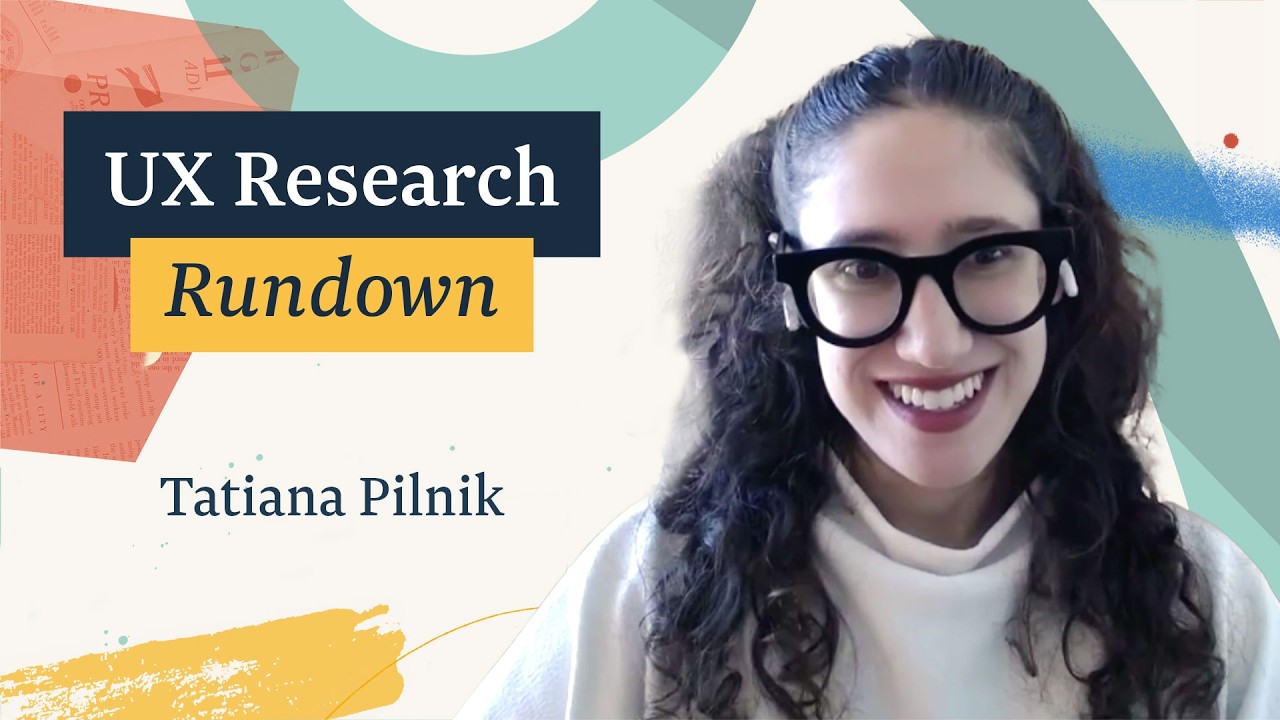
Curiosity in UX research: your career, your stakeholders and AI-moderated interviews
Listen on Apple Podcasts, YouTube or your podcast app.
Lookback CEO Henrik Mattsson talks with Christopher Monnier, principal UX researcher at Microsoft and formerly at Airbnb, ahead of his session at Learners' Research Week in San Francisco on using research skills to steer your own career. They discuss curiosity as what drives researchers, why insights only matter once they reach the right stakeholders, what AI can't learn from documents, how to combine your own interviews with AI-moderated ones, and why a short clip can lift a product team.
Key takeaways
- Spend more of your time getting insights to the right people at the right time. As AI makes insights easier to produce, that is where a researcher's value is, and it means understanding stakeholders.
- Interview stakeholders often and briefly, ten minutes or a Slack thread, and add what they say to the material your AI analysis reads. AI only knows what's written down, not the culture and mood a researcher picks up.
- Run some interviews yourself before AI-moderated ones. About ten of your own show you where to look and what to ask, then AI-moderated interviews can cover 30 to 100 people. At Woven, Christopher built personas from 12 AI-moderated interviews.
- Share small things often. A 15-second clip of a user excited about a problem renews the product team's curiosity, so don't wait for a breakthrough insight.
- Use your research skills on your own career. Notice what keeps holding your attention, and when it stops matching what your company cares about, look for work that does.
Chapters
- 00:00 Motivating and inspiring curiosity
- 01:43 Christopher Monnier’s Origin Story
- 05:15 Applying UXR skills to your own career path
- 08:32 Why is it important for researchers to be curious?
- 13:06 How to encourage curiosity in your team and company culture
- 15:29 What can we expect from Christopher Monnier’s talk at Research Week?
- 17:04 Are researchers more curious?
- 18:38 What will the talk focus on?
- 22:01 How to apply your researcher’s curiosity to other aspects of your job
- 25:16 How Lookback’s new Stakeholder Interviews feature identifies research goals with AI
- 27:31 Using AI in UXR
- 32:39 Curating research
- 34:55 What other important things are happening in the UXR industry?
- 45:28 What are your take-aways from this conversation?
About Christopher Monnier
Christopher Monnier is a principal UX researcher at Microsoft, working on Copilot. He has a master's in mechanical engineering from the University of Minnesota and started as a mechanical engineer at a medical device company, where he moved into human factors engineering, designing device interfaces and running usability tests. He spent several years at Airbnb researching the guest experience, then worked at the AI travel startup Woven. He writes about UX research at chrismonnier.substack.com.
Transcript
Motivating and inspiring curiosity
Henrik Mattsson · 00:09
Hi everyone, and welcome to another episode of the UX Research Rundown, now in its fourth season. My name is Henrik. I’m the CEO of Lookback and your host for this podcast. And if you listened to the first episode, you know that this season we are doing something a bit new. We are bringing Research Week to the people, before it’s actually happening. And we’re inviting guests, or, you know, speakers, organizers, people involved that you will have a chance to come see in San Francisco in June.
I hope it is June. It’s probably in June. Check the website. Don’t trust me. And with me today, I have Christopher Monnier. I say that with an extra little French, in a way, because I’m up in Montreal, as you can see, with all the snow here. Look, it’s a great pleasure to have you. You are a very senior IC, self-described, something like that. You’re on an interesting journey and you’re just embarking on a new adventure that we can’t talk too much about, but it sounds a lot of fun.
So congratulations on that. And welcome to the show.
Christopher Monnier · 01:22
Thanks. Yeah, thanks for having me. I’m excited to talk.
Henrik Mattsson · 01:25
Awesome, awesome. So we always start the same thing, with the origin story of our guest. So how would you describe your way into becoming a supervillain, and getting to becoming this person in UXR?
Christopher Monnier’s Origin Story
Christopher Monnier · 01:43
Yeah. Okay. I’ll go through the whole thing. So I have a master’s degree in mechanical engineering, which is not really a traditional path into UX research. I’m from the Midwest. Went to college, University of Minnesota, got a degree in mechanical engineering and started working as a mechanical engineer at a medical device company, because I didn’t know what I wanted to do. It was just like, I don’t know, my friend got this job, I should probably work there to do it. And I didn’t really like it at all.
It was very boring. My job for like six months was looking at handwritten notes and comparing them to spreadsheets and correcting the errors. It was so boring. So maybe not the best example of mechanical engineering. Maybe if I would have had a cooler job, I would have stuck with it. But that was so boring that I was like, oh, man, I got to do something else. At that company that I was at, there was an opening for a human factors engineer within the company, and I sort of finagled my way into that role, because I had just enough exposure to user experience, human factors, industrial design in college to know that that could be interesting.
And as soon as I started in that job, I was like, oh my gosh, this is so much better than what I was doing. And so that was the big switch over to what led to doing UX research. But when I started as a human factors engineer, it was really more about design, physical user interface design. I designed some interfaces for medical devices that took like seven years and finally made their way to the market. But while doing that, I started to do usability testing, and for medical devices, it’s all about safety and making sure people don’t make really bad misinterpretations and that type of thing.
And that was super interesting. I didn’t even know that that was a thing. But as soon as I did my first usability test, I was like, wow, this is so cool. Interview people. And so it was always in the background as part of my job. And then over time, that just became more and more interesting to me, and how I wanted to spend more and more of my time. And then maybe another big pivotal moment was tagging along in some ethnographic research while I was at this company.
We hired a consulting firm to do it, but I got to go along with them and do this home research in rural Arkansas. And it was like, oh my gosh. I was so excited to have the chance to do that. And after that I was like, man, whatever, all I want to do is this research thing. The design stuff is fun, but it doesn’t excite me as much as the research stuff. So that put me down the path towards UX research. I’ll stop there, because then there’s a lot of other stuff that happened after that, but that was sort of how I went from mechanical engineering person to UX researcher sort of person.
Henrik Mattsson · 04:23
Awesome. Well, you know, it’s funny, we always do this segment in the beginning because when I talk to people just coming into the field, they’re always like, oh, do I belong and all that stuff? And I say, you know, I hear the craziest stories, and every time I have someone on, there’s a new way in. Like, mechanical engineering, first time I hear about it. But yeah, it makes perfect sense. And I can hear the passion in your voice when you’re talking about this, so clearly.
Love at first sight with UXR, honestly. Awesome. And you’re actually going to talk. In UXR Week, you are going to be part of, I think it’s one of those half days in the beginning of the week where it’s kind of a special track, and you’ll be talking about kind of how to manage… get into a career in UXR. Did I get that?
Applying UXR skills to your own career path
Christopher Monnier · 05:12
No, that’s… I still have to do my talk. I don’t really know what it is, really, but the general outline is this idea of following your curiosity to figure out what you want to do, which sounds sort of obvious. It’s sort of follow-your-dreams type career advice. But specifically, I think it’s interesting because I think a lot of the things that you do as a UX researcher, like listening to other people, listening to your own ideas, listening to thoughts, synthesizing all these different signals into a set of recommendations, I think you can apply those to your career itself.
So that’s, I think, sort of the gist of my talk. And I have examples that I’m going to walk through that are key moments where it becomes really clear. Just like if you’re doing research, there might be certain interview moments, right? If you’re interviewing someone, maybe it’s always been simmering under the surface, some insight that’s in your head, but then someone says something or they do something in an interview and it all just sort of clicks. I feel like I’ve had those moments in my career as well.
I just sort of mentioned the ethnographic research that I tagged along on. It was always like, oh, this is so cool. I love doing usability tests, and it’s sort of boring and sort of fun. But then when I did the ethnographic stuff, there was a specific moment. I remember being at this trailer in rural Arkansas as we’re pulling up. We’re driving a rented car, and it was dark, and we’re in the middle of nowhere. Literally, there’s not even a little village. It was a trailer in the middle of a field.
And it’s like, what is this going to be? And you have all these stereotypes or whatever. And then we go in and it’s just this house, this trailer, and two guys live there. And the reason they live there is because they were sort of ostracized from the community because they were gay. And every single stereotype I had on the drive into the place got completely disrupted. And then the whole interview was just fascinating. It was all about heart disease and the medical device they were using for that.
But there was so much more to it. It was just the richness of the story and the whole circumstance. It was like, oh my gosh, every human is fascinating. All I want to do is talk to people. So there’s moments in my career that I can think of like that, that just stand out. And I think it’s very similar to doing research in that respect. Yeah. I mean, it’s…
“Every human is fascinating. All I want to do is talk to people.”
Henrik Mattsson · 07:30
When you tell that story, I think about it as, you know, what’s the whole point of doing research? Well, it is actually that you’re encountering reality and you’re challenging your stereotypes. And reality is much more fun than what you think it is. It’s like anything can happen in reality, you know? And that’s a great story exemplifying that. So tell me more about curiosity, because that’s something that… I’m a father of two. I have no idea what I’m doing, but I have this feeling that curiosity is something that should be encouraged.
When I see the people in my life that have been extremely successful at what they do, and I’m not just talking about making money or something, but in whatever they take on, when someone is really good at something, it very often comes with this very curious attitude, like, tell me more. That seems to be the thing that you have focused on in your thinking here. What is it to you? Tell me a bit more about that.
Why is it important for researchers to be curious?
Christopher Monnier · 08:32
Yeah, I think that’s a good… I like this tie-in with success or whatever, because that can obviously mean a lot of different things. But for me, curiosity feels like the central animating force, at least with respect to work. Some people are really motivated to build something, and they maybe don’t even care exactly what it is. They want to start a company, right? And they might start many different companies, but they just want to build something. Or other people want to, I don’t know, create art or sing or dance or whatever.
There’s certain things that just drive you. And for me it’s understanding, or just wanting to figure things out. When things don’t make sense, or when I don’t understand things, or when something is new to me, I just have this thirst for understanding it. And so for me, that’s how I think of curiosity. It’s the thing that, above all else… In any job, there’s all these things you can do, but the understanding bit has always been the thing that I get most excited about. Even if it’s homework in school, or when I was a mechanical engineer, there was still this element of trying to understand and make mental models of how people would use systems and all that stuff.
So for me, that was the thing. Once I realized that that was the thing that got me most excited… I think it wasn’t a conscious decision or whatever, but now in hindsight, I’m like, oh, that’s what was clicking for me when I decided to go down the path of UX research. I just love understanding things. Of all the things you can do at work, that was at the top. And so yeah, that’s how I sort of thought of curiosity.
Henrik Mattsson · 10:16
Interesting. And for me, it’s almost like, I don’t know if this resonates with you, but you see it definitely in children, and people before they have been ruined by society and education and parenting and everything. It’s really… What’s the word? It’s kind of like the force that pushes you into who you really are, because we’re all curious about different things, right? And it can be embarrassing to be curious about something, or it can be the wrong thing to be curious about. It’s like, “Ah, stop asking so many questions!”
And it’s really easy to discourage curiosity. But it seems to be such a core thing for who we are, in our own weird ways, you know?
Christopher Monnier · 11:00
Yeah, I think that’s powerful. I have two kids as well. And so, I mean, that’s my favorite part of being a parent. I just love it. It’s the best thing ever. I just love when your kids get excited or curious or passionate, whatever it is, about a thing, and they just become sort of obsessed with it, even if it’s just for a day. It’s the coolest thing to see them open up and try to understand things. And yeah, I think curiosity is very precious, right?
With my kids, of course, I never want to make them feel like, oh, that was a dumb question. You want to indulge their curiosity. I try to foster it and nurture it as much as I can, because, I mean, obviously I’m biased. I love curiosity. But I think just as a child, it’s such a neat experience to go through, where there’s a point where you’re not aware of something, much less understand it. And then you become aware of it, and then you understand it. And then, I don’t know, hopefully you can continue that through life.
But as a kid, when you start as a baby, you literally know nothing. You’re not aware of anything. So everything is curiosity. So yeah, I just love it.
Henrik Mattsson · 12:12
I love it. Sometimes we kind of forget, when we make frameworks and models and we talk about stuff, that you just follow your curiosity about stuff, and if you’re in the right career, you’re going to have success, because your focus is going to end up on the right things. But thinking about this in your career as an adult, I imagine that you’ve encountered places that were varying degrees of good or bad in encouraging or discouraging curiosity. Is this something at all that kind of goes…
I don’t want to… You don’t have to do your talk here. But I’d be very curious to know what you’ve observed in terms of company culture and team dynamic and everything that can kind of encourage this or not, you know?
How to encourage curiosity in your team and company culture
Christopher Monnier · 13:06
Yeah, it’s a good question. I feel like, I mean, it’s probably the case that maybe certain organizations foster curiosity more than, or cherish curiosity more than, others. I worked at Airbnb for a long time, and I think that was a very curious, friendly environment. But I actually think, for me, if I think about whenever I’ve changed jobs or made a zigzag in my career path, it’s usually when there’s a time when my curiosity lines up perfectly with the company’s curiosity, if that makes sense. The things that they care about, I’m like, that’s what I care about.
That’s what I’m curious about. And then maybe I understand everything I need to understand about the thing, and the company still focuses on that. That’s sort of, I think, how it was for me at Airbnb, where it was just so fascinating, this new way of traveling. I was always working on the guest side of things. So, what’s it like to stay in an Airbnb? And so it was so cool to talk to people who didn’t even know what Airbnb was, and then see how they understood and made sense of Airbnb, and just understanding the mental model that first-time guests and then repeat guests have.
And after a while, I guess maybe I became less curious about that, because I felt like I understood it. But obviously Airbnb still cares about that. So then it was like, oh, I don’t know, maybe I should work on some other topic or chase some other curiosity. And so anyway, for me, I feel like there’s these moments where it aligns really well, and that could be a year, or it could be 20 years. It just sort of depends. And I don’t know, I can’t really control what you’re curious about.
It’s like some nature… So it sort of sneaks up on you. So I think that’s why it’s important to pay attention to that. And they can go in and out of alignment, right? It’s not like, oh, I had a boring day at work today, therefore I must switch jobs. I think it’s more like, okay, it’s been a couple months and I’m not excited about the questions I’m working on or whatever. What else is there out there that might excite me?
Henrik Mattsson · 15:16
Interesting. So people that come to your talk are going to get some… Is it going to be like, here are five things you can do to follow your curiosity better, or what can we…?
What can we expect from Christopher Monnier’s talk at Research Week?
Christopher Monnier · 15:29
Yeah, I don’t know. Maybe that’s a good idea. I don’t know. Well, I mean, I don’t want to make it too career-advice-y. I’m so rolling my eyes, because, I don’t know, whatever, why should people listen to me? But I think maybe if there’s a takeaway that I hope that people leave with, it’s this idea that the things you do as a researcher, you can also apply to yourself, as a career. And maybe there’s some things I can articulate there to make it clear. I think just a quick anecdote: there’s a lot of people that I worked with, specifically at Airbnb, but other researchers that I’ve worked with at other times, who have gone on to become career coaches.
And I don’t know if it’s just a tech thing or a researcher thing or maybe both, but it seems like that’s a natural sort of fit. So, I mean, we’re all our own career coaches to some extent, right? Or at least we should be. So yeah, I think there’s something there, some synergy or whatever, with researchers and career stuff.
Are researchers more curious?
Henrik Mattsson · 16:36
Oh, that’s interesting. So the question, of course, that pops up in my mind is, it seems to me in my life… But look, I don’t know anything about… I’ve never thought about this in some sort of intellectual or scientific way. But it seems to me that not everyone is equally curious, you know? Do you think that researchers are more curious, perhaps, than others, or a different type of curiosity, or…?
Christopher Monnier · 17:05
I mean, who knows? I would say, yeah, probably more curious. Because there’s other jobs you could do in life, and I think it’s a selection thing. If you’re not curious, you probably aren’t going to make it as a UX researcher, or you’re just going to get so bored. It seems like busywork. But I think, to go back to something I said earlier, maybe everybody’s equally curious. I don’t know how that works. But of the stack of things that drive your interest, if curiosity is at the top…
“If you're not curious, you probably aren't going to make it as a UX researcher, or you're just going to get so bored.”
I think for researchers, curiosity is sort of at the top. And for other people, like, I don’t know, the stereotypical boring job of an accountant. I’m sure there’s great accountants who have really rich curiosity, but just to pick on that job for a second. It’s not to say that an accountant isn’t curious. I’m sure there’s a lot of curiosity in there, or whatever the job is. But maybe it’s not at the top of the list, right? Whereas for researchers, or at least for me personally, I think it’s at the top of the list.
I think it’s true for researchers more generally. There’s other things I care about, of course. But it’s this thing that just rises to the top for me. And maybe that’s true for other researchers, I’m guessing.
Henrik Mattsson · 18:23
Oh, yeah. It’s just interesting. I never thought about it like that. Cool. So are there other things you want to bring to your talk, or is it going to be very focused on this stuff, or what’s your…?
What will the talk focus on?
Christopher Monnier · 18:38
Yeah. Maybe it’s focused on this. I don’t know, I need to find a niche.
Henrik Mattsson · 18:40
Putting you on the spot there.
Christopher Monnier · 18:46
Yeah. I mean, hopefully I have some stories that will be not just entertaining, but relevant, or that can help people. I like to learn by example. So in my talk, I’ll just give some examples like I did. I mentioned this ethnographic research that I was a part of. That was a eureka moment type thing for me. So I think that’s how I will tell my story, with these examples. Hopefully that helps people relate to particular moments in their career journey, or in their life, their work life, that they can, I guess… and now they think about it.
I feel like that’s maybe a good takeaway, to think more intentionally about these pivotal moments. When did you know you wanted to be a researcher? When did you know you wanted to work at this company? And when did you know you wanted to quit this company? There’s definitely… I don’t know how it actually works, but the way it seems to work is there’s this simmer, and then it crystallizes, you know what I mean? And that’s true if I’m trying to understand a given phenomenon. I’m interviewing users, and maybe by the fourth user, something starts to click, and then by the eighth user, it’s like, oh, I totally understand this.
I think it’s true for career stuff too. You sort of get these signals in the back of your head, and then at some point, I don’t know, you have one particular experience, and you’re like, oh, I definitely want to take my career in this direction. You know?
Henrik Mattsson · 20:21
No, it’s interesting. It makes me think… I’ve been talking in other seasons of this podcast, but it tends to come up in every talk, which I guess says something about my curiosity. But there is something about the researcher skill set, you know, the researcher tendencies, or areas of focus and curiosity, that can be applied outside of the actual research job. For example, with stakeholders, which is something that I just love, the whole stakeholder-researcher dynamic. And we’ve been building a bunch of stuff, and now that I’ve been deep in the research on that, I just find it endlessly interesting.
But there’s definitely something there where, if we simplify how researchers should relate to stakeholders in order to be successful and have impact and get a seat at the table and everything, well, they should apply their research skills and research their stakeholders, because they are the product for the stakeholders. So it’s exactly the same thing. And when you talk to research leaders, people that have experienced this, it’s such an unlock. But there’s a lot of people out there who haven’t even started thinking about it this way.
And I have a feeling that curiosity might be the same thing, where you’re super curious about the thing you’re researching, but then you might not have unlocked this power of exploring your own curiosities and what they mean to your career, in a more explicit way. So I don’t know if that’s something you have observed in yourself or in others.
How to apply your researcher’s curiosity to other aspects of your job
Christopher Monnier · 22:00
No, totally. I think it’s a great analogy. There’s the job itself, and it has certain skills with it, like UX research, qualitative UX research, interviewing, whatever, and making recommendations. But yeah, you can totally apply that to stakeholders. And I want to come back to that, because I have some thoughts there. But then I think you can also apply it to your career, right? I don’t know, maybe this is a meta thing for people in general: what are you doing in your normal job? How can you apply it to other aspects of your job, sort of the second-order things, like working with stakeholders, or the career itself?
I’m sort of anchored on this curiosity thing, but I’m sure there’s other people who would bring up some other thing, like, oh man, as an engineer, I’m really motivated by XYZ, and hey, that helps me do this other part of my job, and this helps me do this other thing in my career. So there’s probably something interesting there. But the stakeholder thing, I think it’s such a good point, especially now, with all these new tools and the rise of AI in particular. I think it’s changing research a lot.
I wrote a post on my Substack, shameless plug, chrismonnier.substack.com. We’ll put a link in the show notes, so… I don’t know, maybe you do that at all.
Henrik Mattsson · 23:14
No, absolutely. Absolutely. You’re giving your time to the podcast. There are benefits.
Christopher Monnier · 23:23
So, no, but I just wrote a post about this, because basically the idea is that insights are increasingly achievable through AI, or at least a combination of humans and AI. I don’t think it’s far off to think that you could just assign an AI agent to go do research and it’ll come up with insights. But the trick is, if we assume insights exist, that doesn’t mean that the organization is going to run with them, right? I think the more senior you get as a researcher, the more you realize the trick is getting the right insights in front of the right people at the right time.
“The more senior you get as a researcher, the more you realize the trick is getting the right insights in front of the right people at the right time.”
And sometimes it takes five or six times before you drive the change that you need to drive. And so much of that is understanding stakeholders and applying that research toolkit to that world. Other people have written a ton about this. Judd Antin, who I used to work with at Airbnb, did a great webinar with Carol Rossi. I don’t know which one. That was really good. It was how to be a high-impact researcher, or something like that. And what I loved about that is they had this breakdown of how you should spend your time as a researcher.
And I think it was 40%, or less than 50%, was doing research. And the rest of it was some flavor of managing stakeholders, figuring out how to get the insights to have an impact. And I think that’s totally true, especially as AI… If you fast forward three years or one year from now, maybe you spend even less time doing the research, because AI is doing the research, and you’re spending most of your time translating the insights into the relevant business strategies.
How Lookback’s new Stakeholder Interviews feature identifies research goals with AI
Henrik Mattsson · 25:08
Yeah. All right. So, I mean, now I get to plug some stuff that we’re working on as well, but this is not the purpose. We recently launched… this is my baby, my new baby feature at Lookback: a stakeholder flow. And we built it because, well, first of all, it’s always been obvious in the research we’ve done that stakeholder management is actually perhaps the most important part of success and impact. In the first couple of seasons of this podcast, we talked about how do you get your team along on this journey that is research.
And I talked to a lot of very smart research leaders who have had very good careers and have had a lot of success, and they describe this moment where you go from, first of all, I’m trying to get people interested in what I’m doing. I’m trying to get resources. I’m trying to get a seat at the table, all of these things. And then all of a sudden, when they figure it out with the stakeholders, they’re like, well, now I’m drowned in research requests. It’s just that switch, you know?
But for us, I always wanted to do something like that. But it was when we started building out the AI stuff that we realized that, hey, all this “summarize the insights and tell us what this means”, it just can’t do it if it doesn’t know what people are actually interested in, because research can mean so many things. If you think about how you guys do research, you figure out what stakeholders are interested in. They’re interested in a lot of things. Some of these things can never be researched.
Some of them can, but perhaps not for this project. And then you pick a couple of these, and you do your research, and then there are some things that you weren’t even looking for that you found, and all of this stuff, right? So what we did was we put stakeholder interviews in there. We let the AI look at those, create some goals together with the human, and then it uses those goals to surface insights from the research. And it gives that direct connection with what the stakeholders were actually interested in.
And the quality of the insight generation, and just the AI figuring out what the research means, it’s just like, woop. So it’s a funny thing.
Using AI in UXR
Christopher Monnier · 27:31
Yeah, no, I love this. It’s such a great product idea. I’m sure it’s a great product. I actually sort of touched on this a little bit in the post I wrote. So AIs, LLMs, or whatever AI systems, are great at anything that’s documented or written down or even visually represented, right? It can ingest that, and it can synthesize really well. So you could put in your quarterly planner, your stakeholder interviews, whatever, and then mash that up with the insights from the interviews you’ve done, or the AI interviews that have happened, whatever.
And it’ll spit out probably some really good stuff. And the more context you give it, the better, right? The more relevant it will be. The thing I wonder about, and this is sort of the punchline of my post, is what about the stuff that’s not documented? All the intangible things, like culture or vibes or the mood of the company, or, I don’t know, was this a bad week for your main stakeholder, and they’re not ready to hear the thing you’re wanting to hear? I think you saw some of that with the stakeholder interviews, right?
Because a lot of that is probably not documented in official documentation. But even then, not everything that matters is probably going to be documented. And what to do with that? My takeaway there is, well, finally there’s still one thing for humans to do, which is to go and get all that other non-documented context and then synthesize it with everything else. And I think the more that we can put into words to make it AI-able, the better, because it just allows researchers to spend more of their time on these squishy things, which is what researchers are so good at, right?
So I’m excited for your product to come in.
Henrik Mattsson · 29:21
That’s great. I mean, I think this has to do with curiosity, and the curiosity about how we can have impact with the research we do. I think it’s a lot about understanding, being very curious about researchers… And as you mentioned, I’ve had to think about these things, and I feel like when I studied philosophy way back when at university, and I’m drinking red wine and thinking about the ontology of all of this stuff. But you have all these layers of things, right? What used to be mostly documented as context for the research was the goals and the brief, and that’s a highly curated doc.
It’s great, because you’re interested in that thing, but it’s been negotiated, it’s been filtered, it’s been this thing, and then it meets reality. And reality is like, oh, whoa, we stumbled upon this thing and we did this thing, and all of that stuff doesn’t really have a place to go. It doesn’t end up in the report. And we saw this with the stuff that we documented, where it’s like, oh my God, we have all of these things that people clearly think are interesting, but they have nothing to do with what they set out to do.
They just stumbled upon it. And how do we capture that, right? And part of that is, how do you spread this thing out? That’s what’s so great with stakeholders observing research: they can see these things that the researcher would just miss or not prioritize. But when it comes to the documentation, the more you just document your interview, for example, you will also capture a bunch of things. You will capture stuff for the AI, for context, that would be curated away in a brief. It’s there now.
And product, as we all know, isn’t a democracy. A designer will be interested in one thing, and a salesperson will be interested in another thing, and an engineer will be interested in something else. All of these things have equal value, because they’re working on different things, but often they can be negotiated in this political game where it’s like, we should focus on this. With this documentation that the AI can look at, we don’t need to clean that up anymore. It can just be there. And we know that Chris is interested in this stuff.
And then you can get that loop on it… You know, I was talking to Noam Segal the other day.
Christopher Monnier · 31:44
Yes. I worked at Airbnb. Of course.
Henrik Mattsson · 31:46
Yeah. Oh, there you go. Of course. Everyone has worked with everyone. But he was saying, he’s like, look… I think it was TikTok. And it’s like, look, imagine if your TikTok feed wouldn’t be personalized to you. What if you would just see what everyone is… if it would just be one feed? Would it be a completely useless product now? You wouldn’t want to see that. And research should be the same for stakeholders. It’s like, why… I don’t want to see the designer feed. I want to see the engineering… you know.
So there is something there too. And that goes down to the curiosity of, as a human, we need to be curious about, hey, what drives this person’s engagement with the research I’m doing, right? I need to understand that at a personal level. Sorry. Go ahead.
Curating research
Christopher Monnier · 32:39
Oh, no. Yeah, I’m just agreeing with you. I think it’s such a good point, this idea of curation, a research brief curating away all this important context, right? Because the researcher makes the brief, right? And maybe they get feedback from other people, but there’s so much that’s not going to be captured in there. And I think another post I’ve written about is this idea of scarcity mindset versus abundance mindset. I think we’re in this era of UX research abundance, or just general abundance with respect to AI, right?
Because, as you said, maybe it’s nice to have a brief as a TL;DR, sort of, hey, what is this about? But there’s no limit on the number of Google Docs you can put into an LLM. It’s almost infinite. So why not put in the context of, I don’t know, the conversation you have with the engineer, or the engineering roadmap, or whatever design vision deck that they made? Why not put that all in there? I’m sure there’s things to figure out with that. But there’s no limit on the amount of context we feed the AI system or whatever.
So I think there’s something really interesting there, to tap into the stakeholders, that whole side of the equation, which historically was probably never even given enough weight by the researchers themselves. But now not only do the researchers need to pay more attention to that, but also there’s a great opportunity to fold all that context into whatever the system is that’s going to help people come up with the right insights.
Henrik Mattsson · 34:13
Yeah, absolutely. I was quite surprised to see, when we did the research… I was like, some tool must have dealt with this part of the flow. But it seems like not really. Everyone is just using a big mishmash of a spreadsheet, video files, and… Awesome. Cool. What are some other things that are going on in the… You know, I’ve interrogated you enough about the speech that you haven’t written yet, but that would clearly be very interesting. And everyone should go to Research Week. You can watch this or join online.
But what are some of the other things… I don’t want to say in the news. We’ll talk about that. But in our industry, now, that you think are important things to think about?
What other important things are happening in the UXR industry?
Christopher Monnier · 34:55
Yeah, it’s a good point. I mean, I definitely think there’s just so much interesting stuff happening with AI. We could talk about that forever, I think. I’m a huge proponent of AI-moderated interviews. I’ve done a bunch of them. To me, again, it’s not an either-or. It’s not like, oh yeah, AI-moderated interviews versus human interviews. I think there’s such a nice balance, they’re like a one-plus-one-equals-two type thing. The way I think of it is, if I were given the modal UX research task, somebody said, go do research on this, my starting point would be, okay, I’m going to interview, I don’t know, ten people or whatever, and I’m going to do AI-moderated interviews for 30 people or 50 or 100 people, whatever the right number is, depending on the complexity of the ask.
But I would always want to do both, because the interviews I do myself give me this intuition, this sense of where to look, which I think is a curiosity tie-in there too, right? Feeding that curiosity, and then giving you a sense of where the interesting stuff is, so that you can formulate the AI-moderated interview questions appropriately, and also know where to look when you’re using whatever LLM, ChatGPT, you’re using to analyze those AI-moderated interviews. You have to know where to look. You have to write the prompts.
“The interviews I do myself give me this intuition, this sense of where to look.”
So I feel like that is almost a one-way street. Why would you not? Especially as the cost of all this stuff comes down, why would you not layer in some AI-augmented thing, whether it’s AI-moderated interviews, or it could be, I don’t know, an AI analysis of customer feedback that you have, or if you have just a bunch of open ends from a regular survey, why not just throw that into an LLM and have it come up with themes? Oh, one thing that I think is really interesting, I tried this a little bit at the startup that I was at, a place called Woven.
It doesn’t exist anymore, but it was an AI travel startup. And one of the things we did was we wanted to understand how people were organizing their trips. So we collected spreadsheets or notes documents or Notion docs, whatever people were using. And then we had an AI-moderated interview where we asked people to talk about the document. And that was good, and we came up with themes. But what was really interesting, and I want to take this further, is I think I got pretty far with 12 interviews, and that seems really small, in coming up with personas for the people we interviewed.
I feel like that’s a whole new way to do personas, or segmentation, more officially. The old way of doing it is you have these very official, technical, quantitatively difficult surveys that sort people into the right boxes, and it’s a really time-consuming process. And I’m not sure, but I had this hunch that you could do almost as good with just having a lot of AI-moderated interviews, and then having an LLM, with a couple rounds of prompting, figure out what the personas are, what the clusters are.
It’s a totally different way to do it. So I think that’s one example of how AI is going to end up changing how we do a lot of UX research.
Henrik Mattsson · 38:10
Yeah. No, for sure. I agree. I think it’s so interesting that in every single aspect of the traditional workflows, whether it’s doing personas or doing AI-moderated or whatever, there’s so many areas to just save time and do this with AI. And yes, it’s a very new technology, but it’s also a little bit like, you know, we used to transcribe interviews by hand. Now that’s done, right? When you’re saying AI-moderated, I’m thinking a lot about that. It’s like, well, that’s just a new unmoderated. You would always do this.
You would do a couple of interviews and then you would run a huge unmoderated thing on it, right? But now you can just do that with high quality. So instead of sending a survey, you just let the AI do it. So I think in this sense, the future is very bright, because it just increases the power of each and every UX researcher, if we figure out how to add the human competitive advantage in that. What is it actually we’re… So that’s something to be curious about, just for everyone listening: thinking about, what am I actually uniquely contributing here, to this thing?
Because if we figure that out, all the rest is just an exoskeleton that lets us do everything much faster, right?
Christopher Monnier · 39:37
Yeah. I think it’s such a good point, because if you go back ten years ago, or even 15 years ago, the busywork of a researcher was a lot of stuff that has been automated away, whether it’s AI or just regular tools. Think of the work of recruiting people. Now that’s almost trivial with User Interviews. I love User Interviews. I’m not a paid endorser, but shout-out for it. It’s just great, right? Or Calendly, or Google appointments, for getting schedules. You can run so much of it in a way that is…
So the complexion of the job now, even two years ago, before AI or LLMs became big, was much different than it was ten years ago or five years ago, right? And then AI is just going to supercharge that. So yeah, the existential question is, what are humans good for? I already mentioned this idea of non-documented context, and absorbing that like a sponge, working with stakeholders, or understanding the broader, I don’t know, competitive marketplace. Some of that might be documented, but a lot of it’s not.
I think there’s something there. Another way human researchers can contribute to teams, and this is something I love doing, is energy. I know I’m sort of a high-energy person, but energy, momentum, whatever you want to call it. I’ve talked to other researchers about this too, where sometimes just showing a video clip… As a researcher, you might think, yeah, everybody knows this, this isn’t really that revelatory. Just showing a video clip, I don’t know, on a regular basis, every day or once a week, or when the team is feeling a little low, can be a huge jolt of momentum, I think.
And I guess it’s the other point, sort of reading the room and getting a sense of, man, what does the team need now? What’s going to inspire them to remember why we’re building this product? I think there’s a role for the researcher as the energizer, or the momentum driver, or whatever you want to call it. Which sounds so, I don’t know, squishy, but I love it.
Henrik Mattsson · 41:47
Yeah. I think it connects to curiosity. We talked a lot about the importance of being curious as a researcher, obviously. It seems to be pretty much table stakes: you should be curious if you’re a researcher. But I think it’s fair to say that a good researcher will trigger curiosity in the product team as well, and that goes way beyond the session. I’ve seen this so many times. We measure, obviously, when do we get engagement from non-researchers with the research material? And it’s so obvious that this is something that some person jumps into.
Perhaps the first interaction will usually be viewing a live research session or something like that. And then that does something, and then they want more. They’re curious about that. So there’s something about the energy of reminding people… because we’re reminded all the time. I think about this when I’m demoing the product or something like that. I’m reminded constantly of, hey, what’s the good thing about this stuff we’re building? And I get reminded all the time because I meet real people with real problems, and we solve those problems, and I can see that they’re happy about it and everything.
But my team is working on it. They don’t see that all the time. And I think a researcher has that kind of energizing motivator, locker room speech… I don’t know, it was a highlight reel, guys. You know?
Christopher Monnier · 43:22
I love this idea of activating curiosity among the rest of the team. Because as a researcher, you maybe take it for granted. Of course I’m curious. And even if it’s the 20th interview on the topic, you don’t lose the curiosity, or you might lose it until you start talking to someone and you’re like, oh my gosh, this person’s unique and interesting. I can’t wait to talk. But yeah, the rest of the team, of course, has that curiosity. Maybe it’s a little latent or whatever, and just needs to be activated.
And I think maybe that’s what’s going on when you show a video clip or share a story. It can even just be a story: I talked to this user this morning, and XYZ. For people whose curiosity isn’t constantly at the forefront like a researcher’s, it’s nice, because it brings it to the forefront, even just for an hour or two. And it’s a nice jolt that we, I think, as researchers might take for granted, and forget that not everybody is constantly living in the world, in the minds of the users, right?
If anything, I think we under-communicate in general as researchers, because we think… this is me, maybe, at least… the only thing worth communicating is some breakthrough insight, something that’s really going to blow people’s minds. And it’s like, no, that’s such a high bar. The bar should just be: here’s a user getting excited about a problem or a solution. Yeah, it’s a 15-second clip, and that can be really beneficial. So I just think we should do more of that type of thing. And I think that’s a role we can play as researchers, the energizer sort of thing.
“The bar should just be: here's a user getting excited about a problem or a solution. Yeah, it's a 15-second clip, and that can be really beneficial.”
In Lookback Cut the moment into a clip and share it as a reel that anyone with the link can play. Learn more
What are your take-aways from this conversation?
Henrik Mattsson · 44:52
I totally agree, I totally agree. Awesome. Now we have reached a point in the podcast where… I don’t know how you feel about it, but this was great. I want to keep talking about this forever. But we are going to start rounding this off. So we’ve had this discussion now. It’s the first time you and I talked live. It’s been great to have this conversation. I definitely learned a lot. What are some of the new curiosities that this conversation has awakened in you, potentially?
Christopher Monnier · 45:29
I mean, definitely the stakeholder topic that we’ve been talking about, and the product idea that you mentioned. I don’t know if that’s live at Lookback, or when that’s going to be, but…
Henrik Mattsson · 45:29
It is.
Christopher Monnier · 45:29
Okay. Great. That is something I am definitely going to think more about: how to take that context that is out there and put it into words. One easy way to do that is just an interview with a transcript. And now you have it in words, right? It still doesn’t capture everything. Of course, you’re never going to capture everything, but that’s definitely something I hadn’t thought about, as a mechanism for text-ifying these intangible factors. And it definitely chips away at it, for sure. Going forward, it used to be that just the act of doing an interview was so much work, right?
And it’s still a lot of work. But you don’t have to do all the interviews now. AI can do some of them, you can do some of them. And maybe part of the time that you would have devoted to whatever research busywork, now you can devote to doing more stakeholder interviews. I have this mental model, which I think is a little antiquated, of, oh, I’ll do stakeholder interviews for a big project, or when I first start on the team, and it’s a one-hour thing, or once a year maybe.
But no. And it doesn’t have to be a 45-minute session. It can be a ten-minute whatever, or a five-minute thing, or just a Slack conversation, right? But finding ways to absorb what stakeholders are talking about, or what is occupying them. As Judd likes to say, what’s keeping them up at night? First understanding that, but then folding it into the synthesis process, putting it into the LLM that’s going to analyze all your interview transcripts. Why not do that, and why not do that on a more regular basis, and make it, rather than the exception, the rule?
That’s part of a research project: even though I talk to this designer every day or whatever, I’m going to specifically ask them, for ten minutes, what do you want to get out of this research, or whatever, and then put that in there. I think one thing I want to think more about is, what is a good stakeholder interview? I’ve thought a lot about how to do good research interviews. I feel like I could do it. You could give me a topic right now, and I could interview anybody about anything for 30 minutes and do a pretty good job.
But I don’t know, the stakeholders… I’m sure I could do a decent job, but I don’t know what that looks like. And I would definitely want to learn more about how to do that well, because I feel like that’s just going to become more and more important over time.
Henrik Mattsson · 48:05
Yeah. Interesting. That came out in our research, actually, when I talked to some people about how it felt to do that. They hadn’t really thought about what you’re expressing. They’ve done it, but they hadn’t really thought about it as a research thing. And even the way they were thinking about goals: when the AI started creating findings for the goals, and some of them were pretty cool, they were like, I probably could do a better job in writing the goals and making them more distinct and stuff like that.
But that’s something that applies whether you use an AI or not. So I’m happy to hear that’s what it’s triggering. But awesome. On that note, let’s spend some time plugging some things here. You can definitely plug some stuff here, and even other great products. I heard you praise User Interviews. We recently integrated with them, and we did a lot of work figuring out who’s the best, and I think we can say that they’re the best. So love to User Interviews. You have your… Was it a Substack that you have?
Christopher Monnier · 49:05
Yep, yep. chrismonnier.substack.com. I try to update it once a week, or maybe once every other week, or sometimes twice a week, or maybe once a month. I don’t know. It’s free, so it’s good.
Henrik Mattsson · 49:17
Oh, there you go. Awesome. Cool. And of course, to see you in person, come down to San Francisco for Research Week.
Christopher Monnier · 49:25
Yeah, it’s awesome. Or you can never reach… then, I guess, I don’t know. I’m not really… I’m saying feel free to reach out to me on LinkedIn. You can just look me up.
Henrik Mattsson · 49:32
Perfect. Awesome. Cool. Great. Well, hey, thank you so much. Thanks, everyone who has been listening. See you next time. And until then, happy researching. Bye-bye.
Share this post: